
Technology

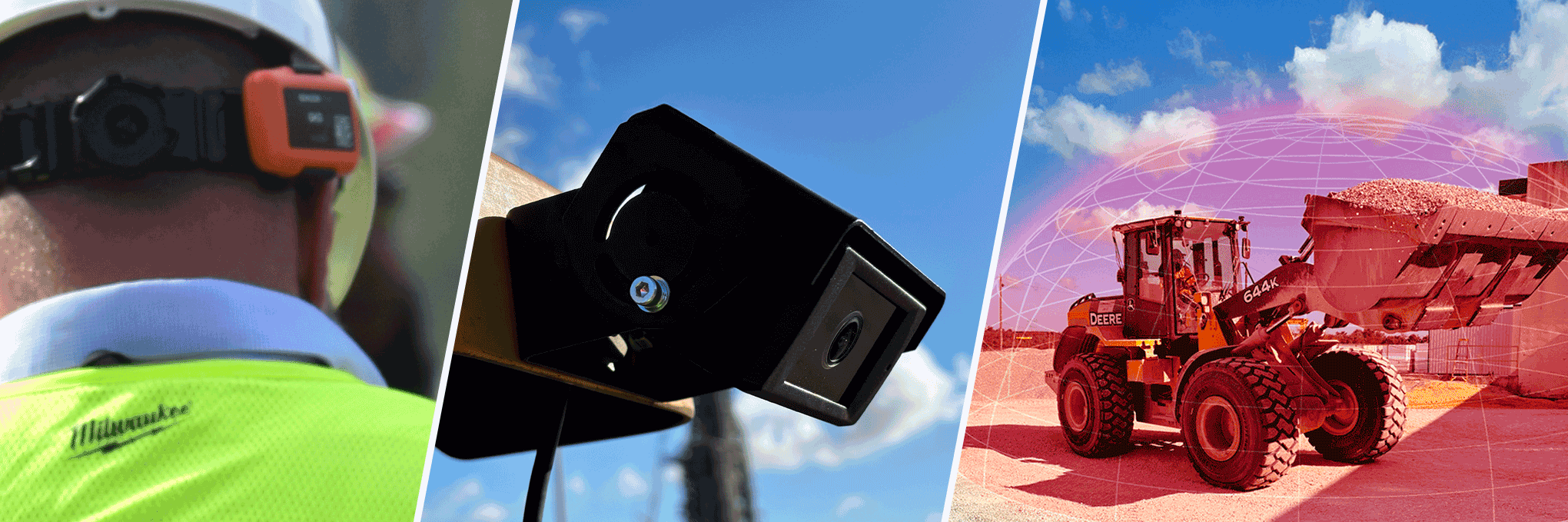
When it comes to protecting pedestrian workers from vehicle collisions in industrial environments, proximity warning systems are widely recognised as one of the most effective technological solutions available. The two dominant approaches - tag-based systems and camera-based systems - use fundamentally different technologies, and each comes with its own advantages and limitations.
Choosing the right system for your site depends on your operational environment, the nature of the risks you face, and the level of reliability you need. This article breaks down how each technology works and helps you understand which approach (or combination of approaches) is best suited to your situation.
Tag-based systems operate on a simple but effective principle. Every worker on site wears a small electronic tag, while vehicles are fitted with detection units. These devices communicate using radio-frequency technologies - most commonly RFID (Radio Frequency Identification) or UWB (Ultra-Wideband).
When a tag enters the detection zone around a vehicle, the system activates the alert mechanisms for both the operator and pedestrian worker. This typically involves vibrating the tag, alerting the operator via an in-cab display, and sounding an alarm mounted to the vehicle.
Because tag-based systems use radio waves rather than visual detection, they are not affected by line-of-sight limitations. They can detect pedestrians through walls, around blind corners, in complete darkness, and through dust, rain, fog, and other environmental obstructions. This makes them exceptionally reliable in the challenging conditions typical of construction sites, quarries, waste facilities, and other heavy industrial environments.
Camera-based systems use AI-powered cameras mounted on vehicles to detect pedestrians visually. Using computer vision algorithms and machine learning, these systems analyse the camera feed in real-time to identify human shapes and issue warnings when a person is detected within a defined zone.
The primary advantage of camera-based systems is that they do not require pedestrians to wear tags. This means they can detect anyone in the camera\'s field of view, including visitors, delivery drivers, or members of the public who haven\'t been issued a tag. This can be particularly useful on sites with frequent, unpredictable foot traffic, and sites with a large amount of temporary visitors.
Camera-based systems also provide a visual feed that can be displayed on an in-cab screen, giving the operator additional situational awareness beyond the alert itself.
The key differences between tag-based and camera-based proximity warning systems can be summarised across several critical factors.
In terms of detection reliability, tag-based systems have a significant advantage. Because they use radio-frequency communication, they are unaffected by environmental conditions. A tag-based system will detect a pedestrian in heavy rain, thick dust, total darkness, or behind a solid obstacle with the same accuracy as in perfect conditions. Camera-based systems, by contrast, rely on visual detection and can be impaired by poor lighting, glare, dust, mud on the lens, fog, and obstructions that block the camera\'s line of sight.
Regarding coverage, tag-based systems provide full 360-degree detection around a vehicle --- including behind, beside, and in blind spots that no camera can cover without multiple units. Camera-based systems are limited to the field of view of the cameras installed, which typically means they cover specific angles rather than the entire perimeter of the vehicle.
For identification, both technologies offer different strengths. Tag-based systems can identify exactly which individual triggered the alert, because each tag is assigned to a specific person. This enables detailed reporting on which workers and which vehicles are involved in near-miss events. Camera-based systems can detect a person is present but generally cannot identify who that person is.
When it comes to false alerts, both systems face challenges. Tag-based systems may generate alerts when a pedestrian is nearby but separated by a barrier (such as on a different level of a building). Advanced systems mitigate this with signal processing that accounts for structural separation. Camera-based systems may generate false positives from shadows, reflections, or objects that resemble human shapes.
Considering total cost of ownership, tag-based systems require tags for every pedestrian on site, which adds an ongoing cost as tags need to be managed, charged, and occasionally replaced. Camera-based systems have higher initial hardware costs but no per-person consumable requirement.
Tag-based proximity warning systems are the strongest choice for sites where environmental conditions are challenging, where 360-degree detection is critical, and where you need to know exactly who was involved in every near-miss event. They are the preferred solution for construction sites, quarries, mining operations, waste management facilities, and any environment where dust, weather, darkness, or physical obstructions are common.
If your priority is data-driven safety management --- using near-miss data to identify patterns, improve site layouts, and target training --- a tag-based system with robust data reporting capabilities will give you the richest and most actionable insights.
Camera-based systems are well-suited to controlled environments with good lighting and visibility, where the primary concern is detecting untagged individuals. They work well in warehouses, manufacturing facilities, and other indoor environments where conditions are relatively stable and foot traffic includes visitors or members of the public who won\'t be wearing tags.
They\'re also valuable as a supplementary layer alongside a tag-based system, providing visual confirmation and covering scenarios where untagged individuals may be present.
Increasingly, forward-thinking safety teams are choosing to combine both technologies. A tag-based system provides the reliable, all-conditions, 360-degree backbone of the detection system, while cameras add visual awareness and the ability to detect untagged individuals.
This hybrid approach creates the most comprehensive safety net available --- covering the widest range of scenarios and reducing the gaps that either technology has when used alone.
Whichever approach you choose, the most important thing is to take action. The data is clear: proximity warning systems save lives. Understanding the technology options is the first step toward finding the right solution for your site.
Tom has nearly a decade of experience in the safety industry, and has worked for SensorZone since 2021 as their New Business Development Manager.
Request a free site assessment and discover how SensorZone proximity warning systems can reduce risk across your operation.

